
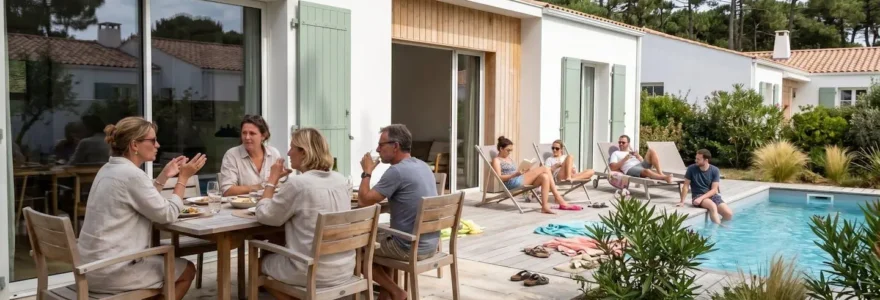
Organising a group holiday exposes a universal friction point: the bigger the party, the smaller the margin for error. A villa that looks generous for eight can feel suffocating by day three if bathrooms queue, kitchens bottleneck, or bedrooms cluster without acoustic separation. The French Atlantic island of Île de Ré has emerged as a magnet for premium group stays precisely because its villa architecture evolved to anticipate these pressure points rather than merely accommodate headcounts. Properties here range from €651 to €4,900 per week for groups of 8 to 14 people, but price alone reveals nothing about whether the layout will dissolve coordination stress or amplify it. The difference lies in how intelligently a villa translates square metres into breathing space, privacy zones, and shared infrastructure that actually scales.
Your group villa essentials in 30 seconds:
- Bedroom-bathroom ratio matters more than total bedroom count
- Separated wings prevent inter-generational friction naturally
- Outdoor dining space for 12+ is non-negotiable in summer
- Professional kitchen capacity avoids mealtime chaos
Space architecture that dissolves group friction naturally
The instinctive metric for assessing group accommodation is bedroom count: seven bedrooms must surely outperform six. Yet this arithmetic ignores the lived reality of shared space. A villa boasting ample bedrooms but only two bathrooms creates predictable morning gridlock, whilst a six-bedroom property with five en-suites flows frictionlessly. Layout trumps size, and this hierarchy determines whether a group spends the week negotiating schedules or genuinely relaxing.
Industry experience reveals that thoughtful villa configurations on Île de Ré eliminate the classic pain points before guests even unpack. The curated Île de Ré holiday rentals spanning villages from Les Portes-en-Ré to Saint-Martin demonstrate how spatial intelligence translates to guest satisfaction. Rather than cramming bedrooms into a single corridor, these properties deploy wings that insulate sleeping zones acoustically and visually. The principle resembles hotel suite design: shared living areas anchor the centre, whilst private quarters radiate outwards with deliberate separation.
Bathroom provision follows precise standards that profoundly affect group dynamics. The minimum threshold sits at one full bathroom per six guests, yet this baseline often proves inadequate under real-world morning pressure. Premium properties targeting groups recognise that comfort begins at a two-to-one bedroom-to-bathroom ratio, ensuring most sleeping spaces include en-suite facilities. As set out in the VisitEngland self-catering quality standards, properties aiming for four- and five-star ratings must provide one full bathroom per four guests, with supplementary WCs required once occupancy reaches five or more. This isn't bureaucratic pedantry; it's the difference between a smooth start to the day and simmering territorial disputes.
The 2:1 ratio guideline: Industry professionals recommend a maximum 2:1 bedroom-to-bathroom ratio for group comfort. Below this threshold, morning scheduling conflicts increase significantly. Villas offering en-suite provision for at least half the bedrooms tend to score highest in post-stay satisfaction surveys.
Wing separation extends beyond mere bathroom access. Multi-generational groups — grandparents, parents, teenagers — inhabit different daily rhythms and tolerance thresholds for noise. A villa where children's bedrooms occupy a ground-floor wing whilst adults retreat to a first-floor zone allows natural coexistence without constant negotiation. The architecture performs the emotional labour of maintaining boundaries, leaving relationships intact. Open-plan designs serve friend groups brilliantly but suffocate families spanning three generations unless spatial hierarchy offers opt-out zones for quiet or early nights.
Matching villa configurations to your group dynamic
Selecting a villa configuration demands clarity about your group's social architecture. Families operate differently from friend collectives; corporate retreats require flexibility that multigenerational reunions do not. The optimal layout aligns with how your specific party will actually use space rather than how brochure photographs suggest it might.
- Multi-generational family (grandparents + parents + children): Prioritise separated wing layouts with distinct living zones to balance togetherness and privacy. Ground-floor bedroom access for older relatives prevents stair negotiation, whilst upper-floor teen zones contain noise naturally.
- Friend groups seeking social atmosphere: Opt for open-plan hub designs with single large communal area and bedrooms as satellites. Kitchens that open directly onto living and outdoor dining spaces keep conversations flowing during meal preparation.
- Mixed-age professional retreats: Choose flexible zone configurations allowing both group work and individual retreat spaces. Properties featuring a second reception room or study enable parallel activities without conflict.
Villas designed for age-diverse groups typically deploy an L-shaped or dual-wing floor plan. One wing houses grandparents or the generation preferring earlier nights, often with ground-floor bedroom access and an en-suite that accommodates mobility considerations. The opposing wing clusters children's or teenagers' rooms, ideally with a shared bathroom positioned to service multiple bedrooms without cross-corridor traffic. Parents occupy a master suite acting as buffer zone or anchor point. This geometry isn't accidental: it mirrors how extended families naturally fragment and regroup throughout the day. Breakfast together, disperse during the afternoon, reconvene for dinner. The villa's bones support this rhythm rather than forcing constant proximity.
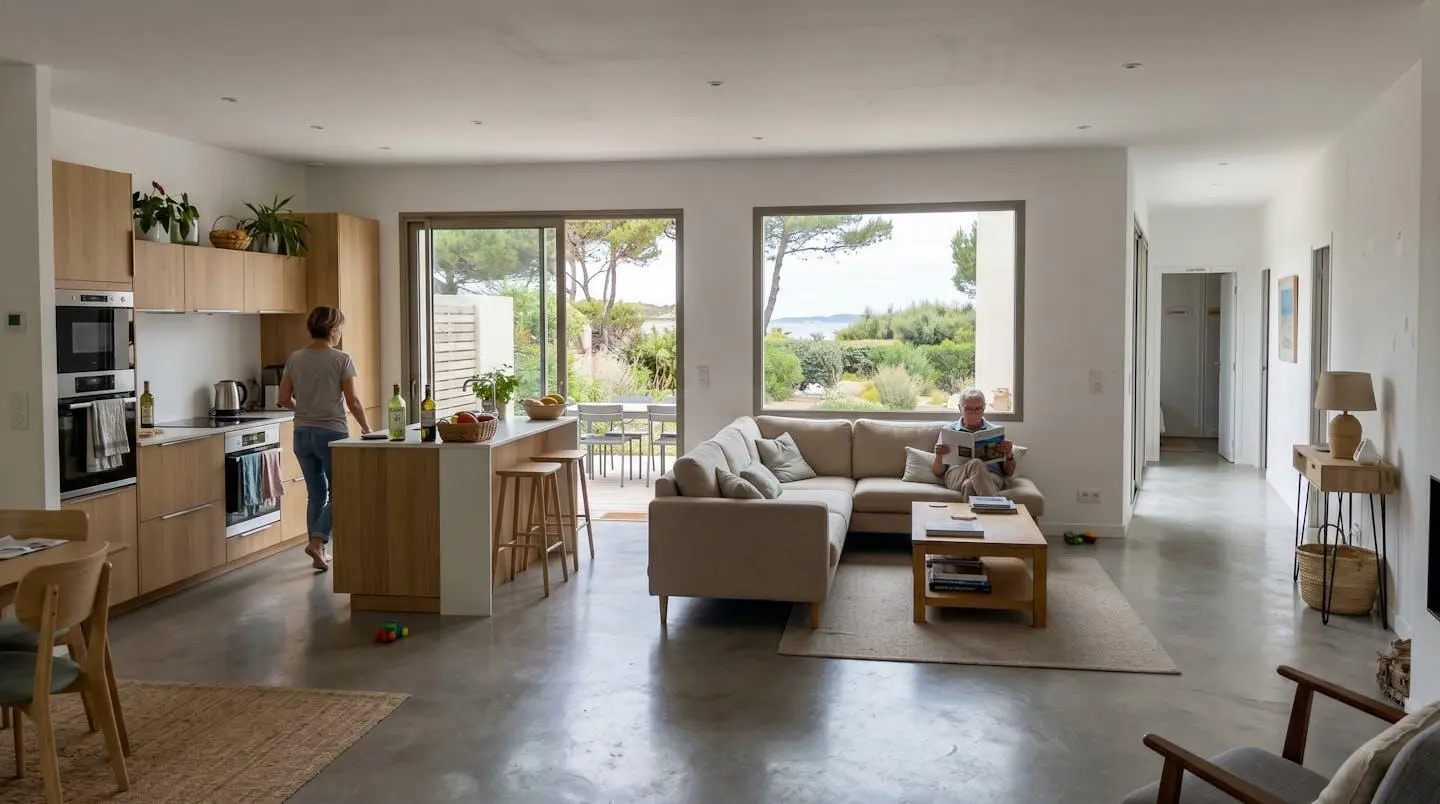
Friend collectives prioritise communal energy over privacy. The ideal configuration centres on a voluminous open-plan space where kitchen, dining, and lounge merge into a single social field. Bedrooms radiate as functional necessities rather than destination rooms — places to sleep and store luggage, not linger. Islands or peninsulas in kitchens become conversation hubs during cooking; long dining tables seat the full group without formality. Outdoor terraces extending the indoor living area prove critical for Île de Ré's temperate summer climate, effectively doubling usable social space. Sliding glass walls that collapse the indoor-outdoor boundary perform best for this cohort.
Corporate or creative groups booking retreats require adaptability: morning workshops demand focus, evenings demand relaxation, and individuals need escape valves. Villas serving this market successfully feature a secondary reception room or dedicated study separate from the main living area, allowing simultaneous programming. A group of ten can split into a working session of six and a cycling excursion of four without spatial conflict. The critical infrastructure here includes robust WiFi throughout (supporting ten-plus simultaneous connections), adequate electrical sockets in communal areas for device charging, and outdoor zones offering genuine seclusion for phone calls or focused tasks. Bedrooms with desks become valuable rather than superfluous.
The practical infrastructure no one remembers to check
Picture this scenario: twelve adults arrive at a stunning villa, thrilled by the sea views and elegant furnishings. By dinner on the first night, reality intrudes. The cooker has only two working burners. The fridge barely accommodates ingredients for tomorrow's breakfast, let alone a week's provisions. The single outdoor table seats eight, forcing a rotation system for meals. Gorgeous photography concealed infrastructure deficits that now dominate the week.
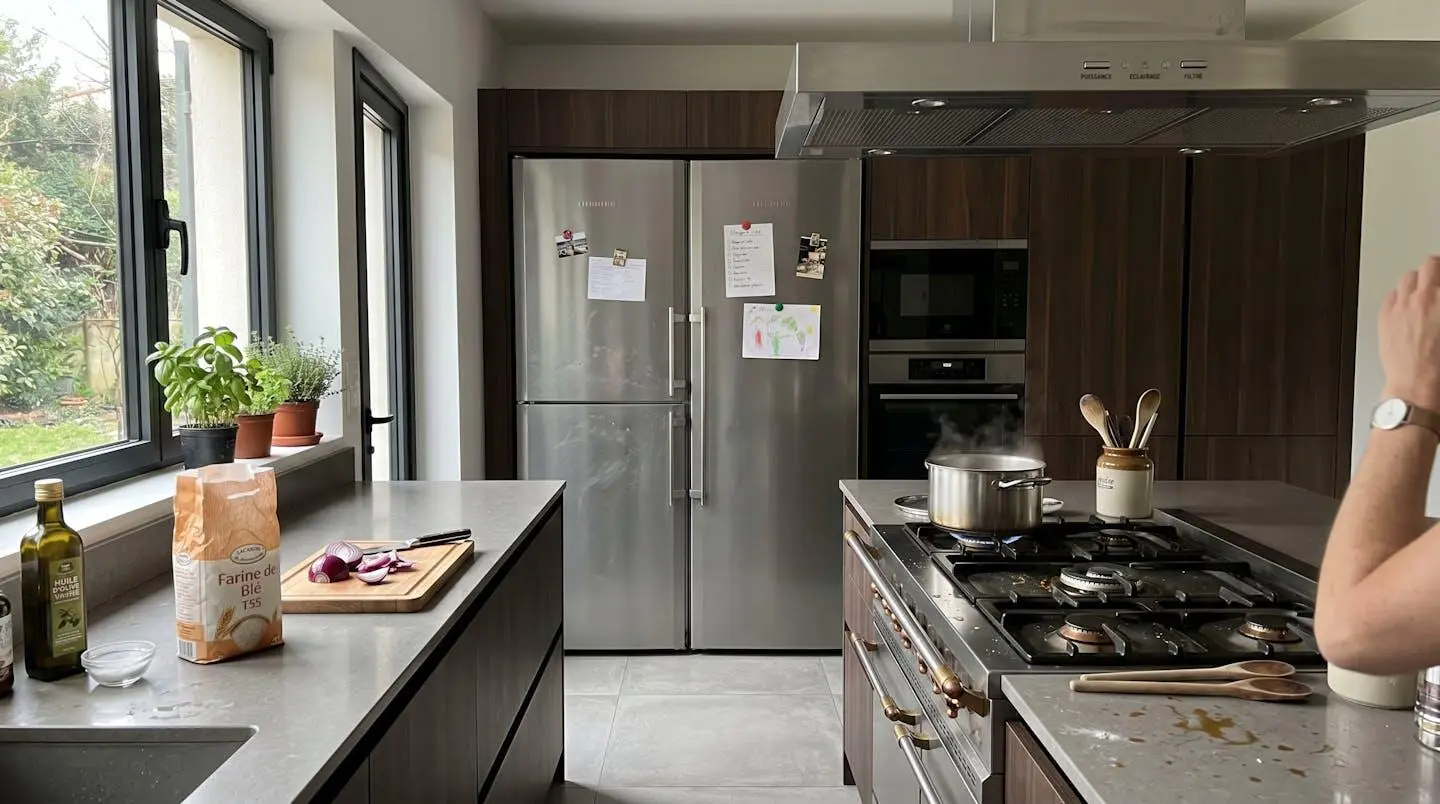
Kitchen capacity represents the most commonly underestimated specification. Villas designed for couples or small families often retain domestic-scale equipment even when marketed to groups of ten or more. A four-burner hob struggles to produce a three-course meal for twelve without military precision timing. Fridge and freezer capacity must ensure adequate refrigeration capacity scaling with occupancy, typically requiring significantly larger units than standard domestic appliances for groups of twelve or more. Dishwashers shift from luxury to necessity at eight-plus occupancy, whilst adequate crockery, glassware, and cookware for the full group prevent mid-meal shortages. When evaluating villa options, consider whether the property's approach to the meaning of solidarity ecotourism extends to supporting local food networks, as this often correlates with kitchen infrastructure genuinely designed for group self-catering rather than minimal compliance.
Parking infrastructure exposes another oversight. Groups of ten typically arrive in three to four vehicles; couples and single travellers rarely coordinate sufficient shared transport. Villas offering enclosed garage space for at least three cars plus additional open parking prevent the scramble of juggling keys and blocking driveways. WiFi connectivity must genuinely support simultaneous usage: a connection adequate for a family of four will falter under twelve devices streaming, video calling, and working remotely. Business-grade routers or mesh systems become essential rather than indulgent. The growth in group self-catering breaks context here: data published by the ONS for 2024–2025 confirms that UK travellers spent 93,823,780 guest nights in short-term lets over the twelve months from July 2024 to June 2025, representing a 10.2% increase on the previous period. This surge reflects not just volume but rising expectations around connectivity and infrastructure that scales properly.
Outdoor dining facilities merit equal scrutiny. Île de Ré's climate makes alfresco eating central to the experience from May through September, yet many villas offer token six-seater garden furniture for properties sleeping twelve. A table seating the full group under permanent shade — pergola, awning, or mature tree canopy — transforms daily rhythm. Without it, meals fragment into shifts or uncomfortable sun exposure. Barbecue or plancha capacity should match group size: a compact two-burner model frustrates rather than facilitates. Laundry infrastructure also scales: a single washing machine serves groups adequately if outdoor drying space or a tumble dryer prevents bottlenecks. Beach holidays generate significant laundry volume, and waiting three days for towels to cycle through creates friction.
- Kitchen: four-plus burner cooker, large fridge-freezer, dishwasher, adequate crockery for group size
- Parking: enclosed space for minimum three vehicles (four for 12+ guests)
- WiFi: business-grade connection supporting ten-plus simultaneous devices
- Outdoor dining: table seating full group capacity under permanent shade
- Laundry: washing machine and outdoor drying space or tumble dryer
- Climate control: air conditioning in bedrooms for summer months
Your group stay questions answered
Practical coordination questions emerge once villa characteristics are understood. The following address the most frequent queries from group organisers finalising bookings and managing logistics.
How do we fairly allocate bedrooms in a group villa?
Establish allocation criteria before booking: families with children get ground floor or separate wings, couples prioritise en-suite access, singles accept shared bathrooms. Transparent pre-agreement prevents arrival disputes. Rotating bedroom allocation works for recurring group holidays, ensuring fairness over multiple years.
What's the best way to split villa costs for groups?
Proportional splitting works best: charge per person for communal costs (villa hire, shared meals), individual costs for extras (wine, activities). Nominate one treasurer for transparency. Digital expense-splitting apps streamline tracking and settlement, preventing end-of-week accounting friction.
Do Île de Ré villas accept groups with pets?
Pet-friendly premium villas are limited. Filter specifically for this requirement early as availability constraints tighten significantly. Properties permitting pets typically cap numbers (one or two dogs maximum) and may charge supplementary cleaning fees. Verify garden enclosure if pets will roam unsupervised.
Can villas arrange grocery delivery for group arrivals?
Many premium properties coordinate welcome provisions or local supermarket delivery. Confirm service availability when booking to avoid first-day shopping logistics. Some owners partner with island suppliers to pre-stock essentials, though this typically carries a premium over self-shopping. A detail the House of Commons Library briefing on tourism (February 2026) puts into context is the evolving regulatory landscape for short-term lets, which increasingly encourages hosts to formalise such concierge services as measurable quality indicators.
How far in advance should groups book Île de Ré villas?
Peak summer weeks (July–August) require six to nine months' advance booking for premium properties sleeping ten-plus. Shoulder seasons (May–June, September) offer more flexibility at three to four months. Groups including expectant mothers should consult precautions for travelling pregnant when finalising travel dates, as trimester considerations may affect timing decisions. Early booking secures first choice of villages and specific layout types rather than accepting whatever remains available.